
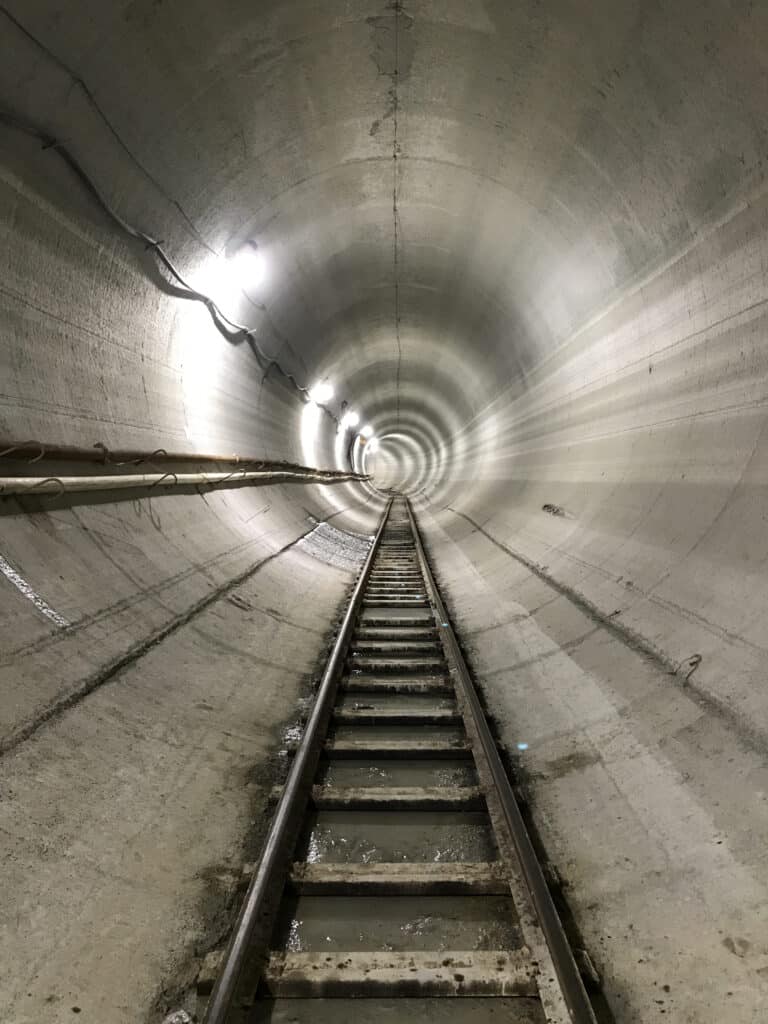
Tunneling through reef-bearing carbonate formations presents significant engineering challenges that demand adaptive construction methodologies and careful subsurface characterization. The construction of large-diameter deep rock tunnel systems in the Midwest has demonstrated the considerable difficulties associated with excavating through dolomitic limestone reef facies and highly porous carbonate units.
During the DigIndy combined sewer overflow (CSO) tunnel system in Indianapolis, excavation of the Lower Pogues Run Tunnel encountered a zone of highly porous dolomitic limestone within the Wabash Formation that produced diffuse groundwater inflows of 1 to 2 gallons per minute per linear foot along 4,500 feet of tunnel, resulting in challenging excavation conditions, excessive pumping requirements, difficult muck handling, and significant schedule delays and cost overruns. Similarly, the Fort Wayne Three Rivers Protection and Overflow Reduction Tunnel (3RPORT) project encountered Wabash Formation carbonates and dolomites during deep rock tunneling at 220 feet below surface, with diffuse water ingress requiring specialized waterproofing and pre-excavation grouting strategies to manage groundwater cutoff.
Ike Isaacson, our Director Geologic Services, presented this study at UCA North American Tunneling Conference. The study was co-authored by Jarek Trela, PhD, from Brierley Associates and Michael Miller, PE, from Citizens Energy Group. This study summarized research on improving the prediction of adverse ground behavior in carbonate reef conditions during the design and exploration phases of tunneling projects.
If you have data you believe could be included in our study, please contact Brierley’s authors:
Ike Isaacson: iisaacson@brierleyassociates.com
Jarek Trela: jtrela@brierleyassociates.com
A copy of Ike’s presentation is available for download here.