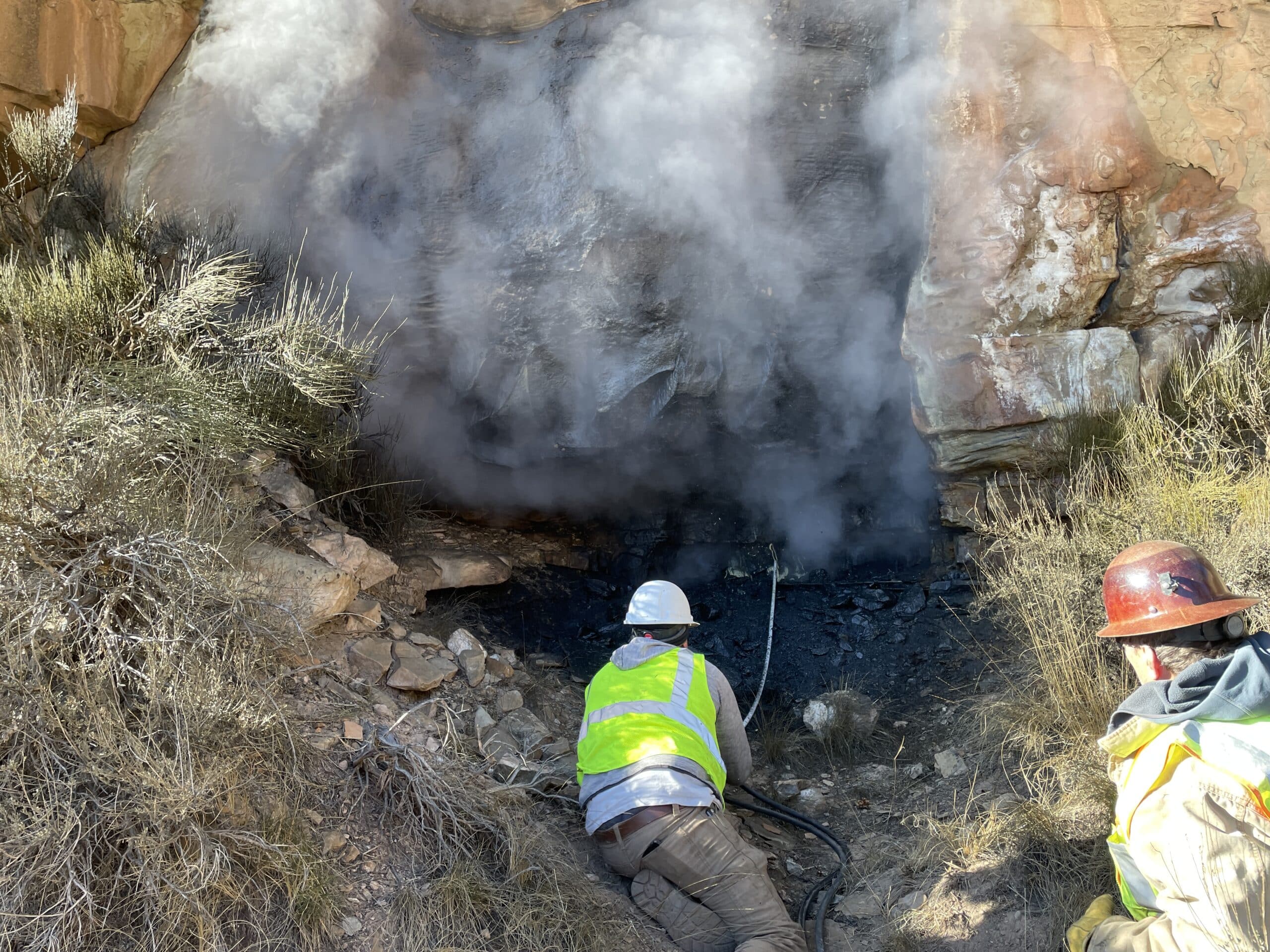
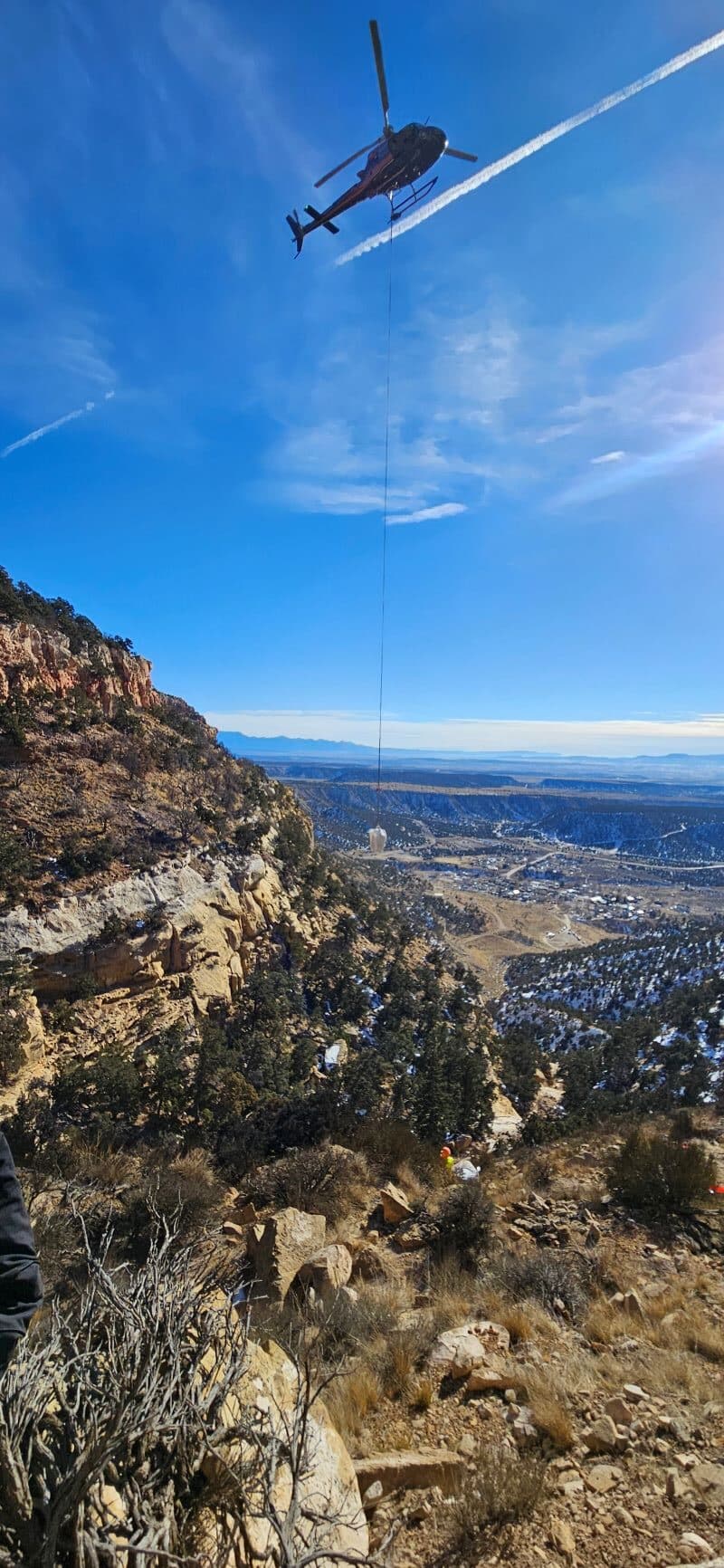
 Though the Kenilworth mine was shuttered in the late 1970’s, the State of Utah Abandoned Mine Reclamation Program (AMRP) has been monitoring a fire in the mine since 2021. In August 2024, the local community of Kenilworth expressed concerns that that fire had grown. A site visit by AMRP, in coordination with Division of Forestry, Fire and State Lands (FFSL), revealed a new sink hole had formed in the mountainside and had rapidly expanded allowing hot combustion gases and exhaust to vent and escape. Brierley Associates was retained to develop a solution to mitigate the conditions. Applied Geologic (Evergreen, CO) served as a subconsultant to Brierley, with the 5 Seventeen Company (Park City, UT) providing construction and contracting, and Black Fox Mining, LLC (Idaho Springs, CO) providing training and on-site health and safety consulting. Because of the remote, rugged, and inaccessible location on the mountainside, personnel, materials, and equipment were transported to the site by helicopter.
The Brierley Team compiled historic documents, ventilation records, and mine maps and conducted project specific remote sensing. Field surveying and mine fire delineation included taking real-time instrument readings and gas samples, and identification of surficial deformation related to subsidence produced from the fire leading to the identification and mapping of additional intake locations across a 30-kilometer area.
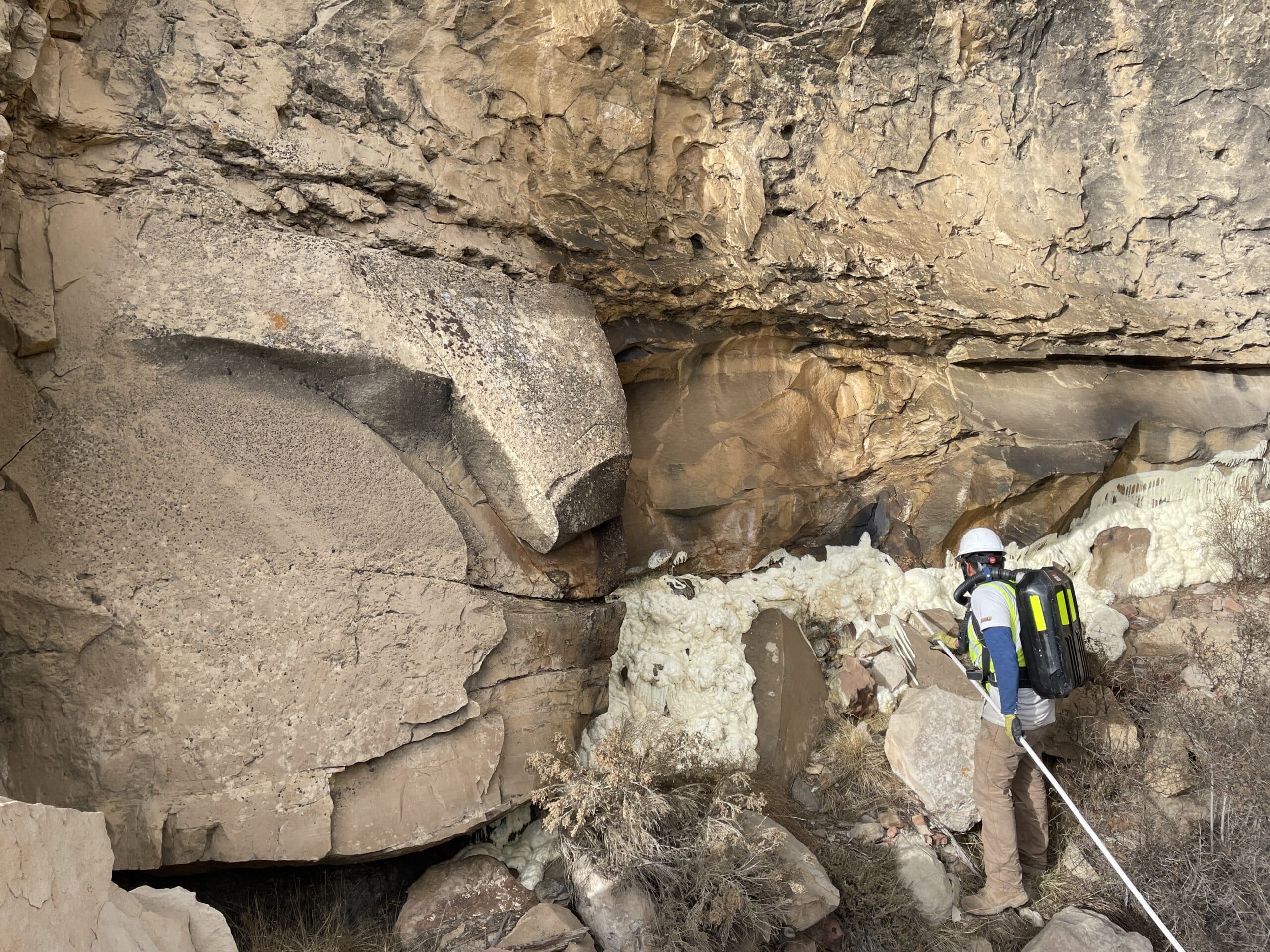
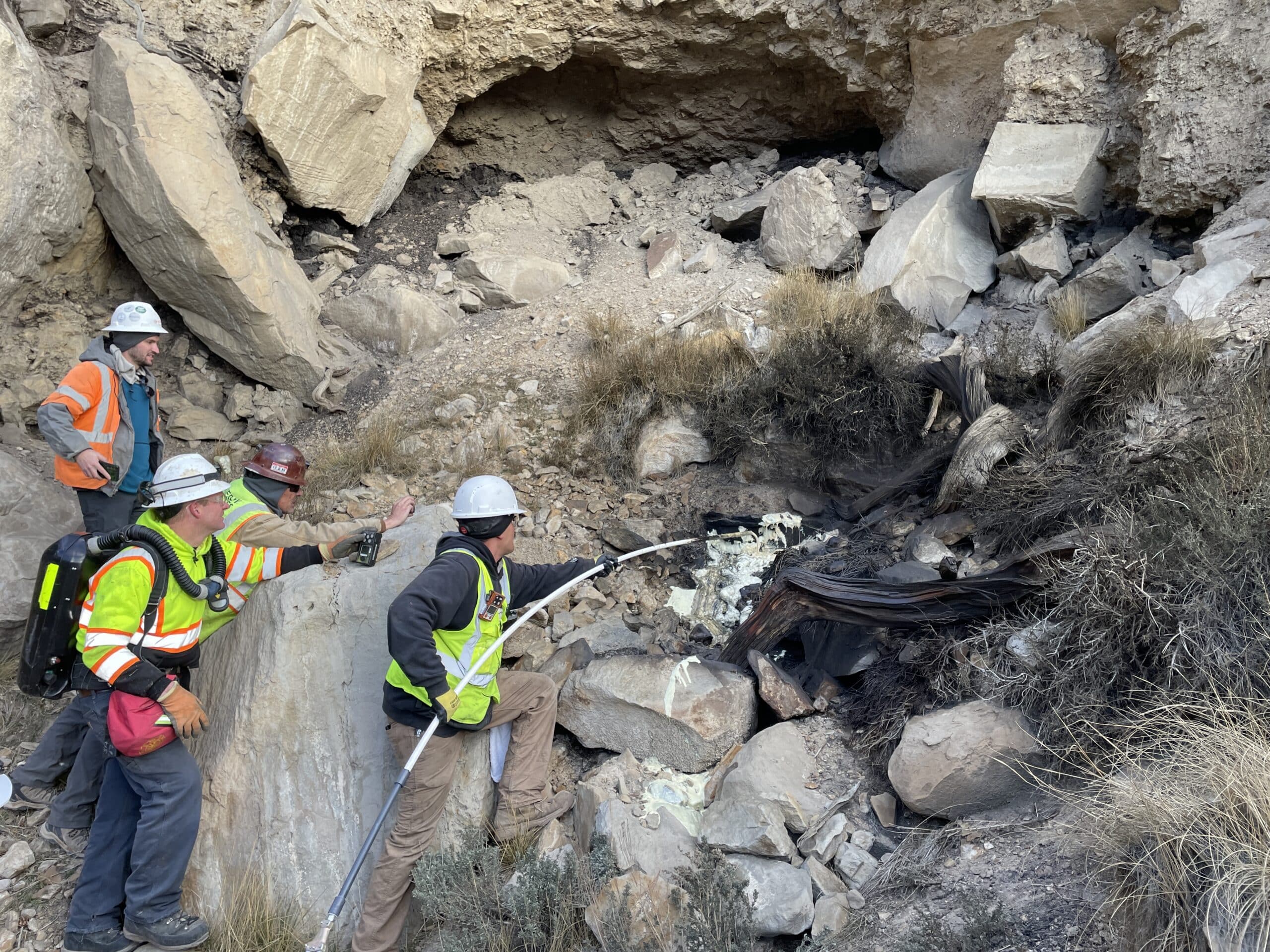
Critical to success of the project was the sealing of leaky adit closures which were drawing large volumes of fresh air at the Castle Gate No. 2, Old Aberdeen, and Aberdeen No. 2 Intake tunnels. By sealing these features first, the overall flow of air to the fire and rate of emissions was significantly reduced prior to commencing work injecting fire resistant foam into the main exhaust vent at the mountainside sinkhole. Sealing the air intakes also reduced the amount of secondary venting once the primary exhaust vent was sealed. In all, 14 mine features were sealed off using fire resistant foam. A total of 3,000 gallons were injected.
While it’s difficult to fully extinguish a mine fire burning off and on for over 100 years, the project significantly reduced the volume of smoke pouring from the mine fire and threatening the air quality for residents of the grateful Kenilworth community, which is immediately downslope from the sinkhole vent. Brierley Associates will continue to work with the Utah AMRP to mitigate these harmful mine fires.
The project won the 2025 National Abandoned Mine Lands Award from the Office of Surface Mining and Extraction. The Utah AMRP produced a video describing the project and the efforts that were taken to reduce this hazard.
Kenilworth Coal Fire Mitigation – Utah Abandoned Mines Reclamation Program