
Due to seismic vulnerabilities of the 240-foot-high Leroy Anderson Dam, the Santa Clara Valley Water District has undertaken a multi-year program to replace the existing dam at the same location with a new dam that meets current seismic safety standards. One of the initial components of this important program is the construction of the Stage 1 Diversion Tunnel. The alignment of this tunnel is through the northern abutment consisting of both hard rock and soft ground, completed utilizing a Microtunnel Boring Machine (MTBM) that bored a single pass 100-inch diameter tunnel lined with Perma-Lok steel pipe.
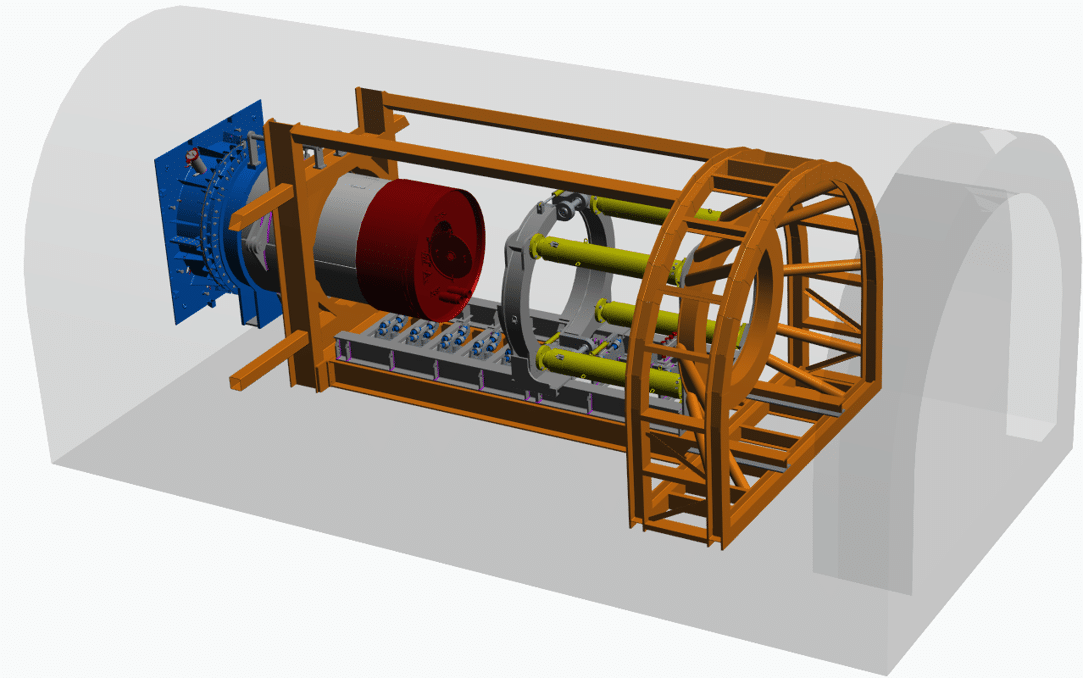
Brierley Associates designed a variety of elements for the MTBM tunnel contractor, including the launch frame, single-pass casing pipe, temporary internal bulkheads, and other associated analysis and plans.
This photo gallery details the challenges that were encountered by the construction team, which includes our client, Vadnais Trenchless Services.
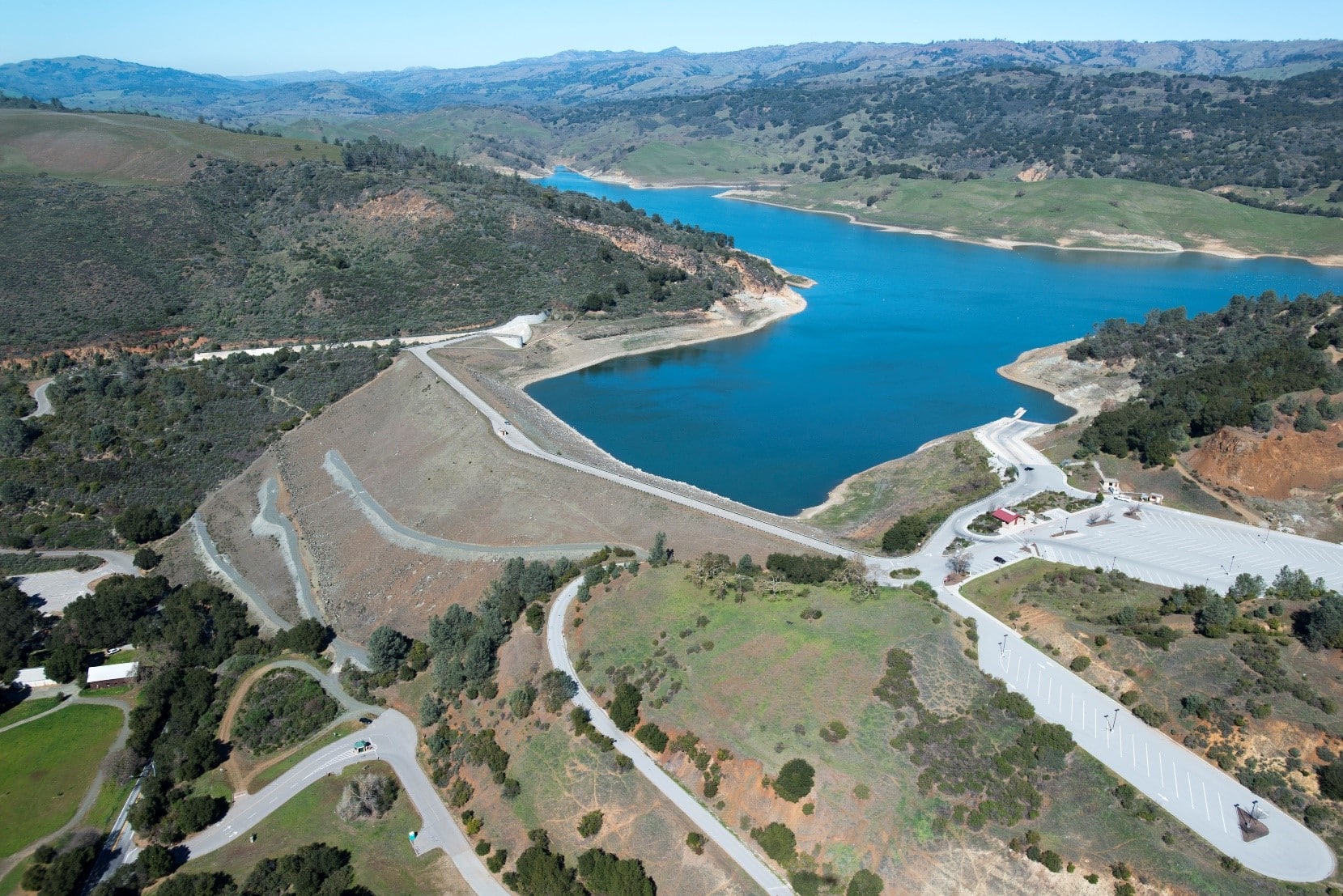
The 240-foot-high Leroy Anderson Dam is located in a region with known earthquake-related safety risks. To mitigate this risk, the Santa Clara Valley Water District (Valley Water) is conducting a multi-year effort to replace it with a new dam at the same location that meets today’s seismic safety standards.
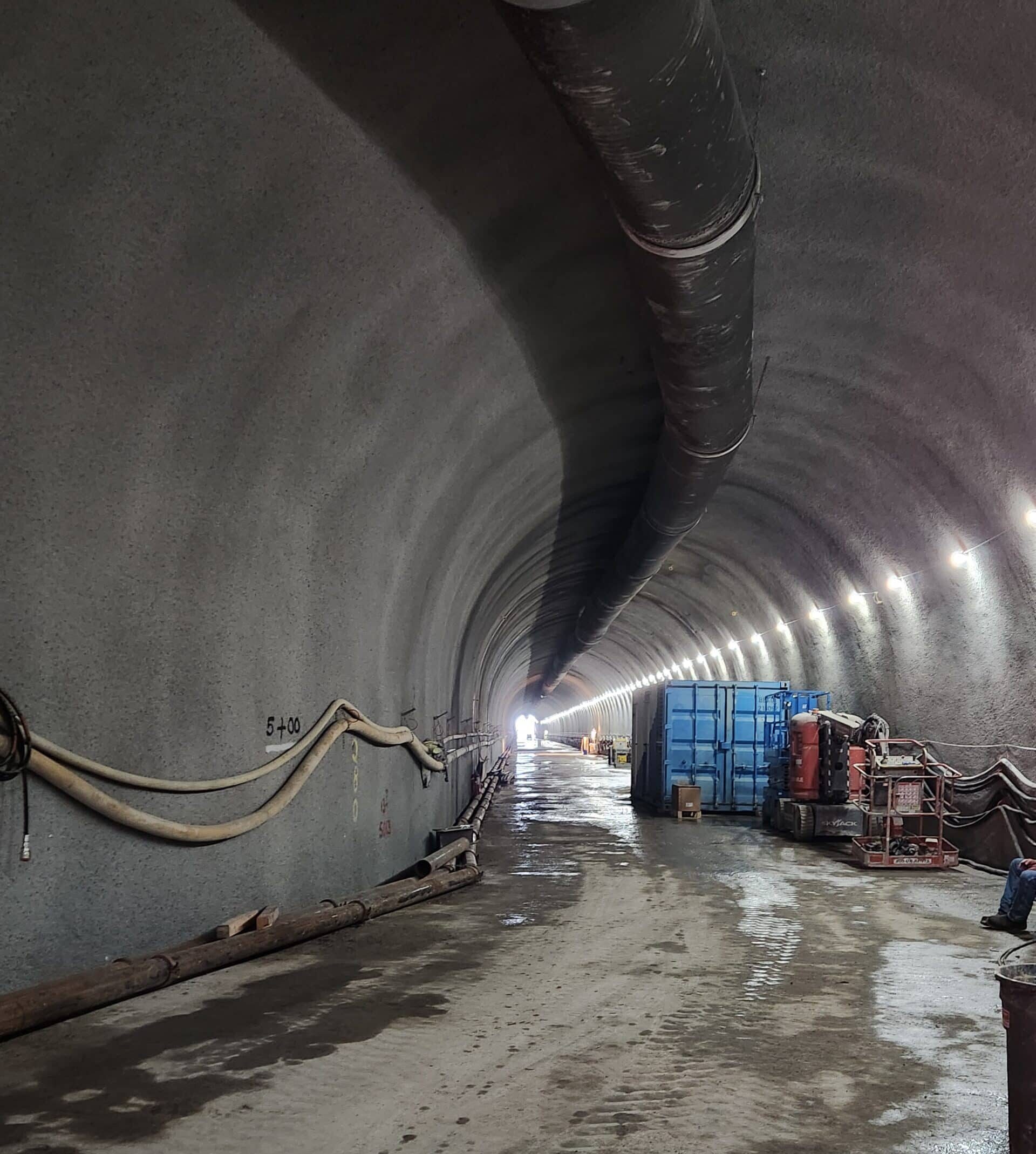
One of the project challenges involved launching the MTBM within the previously-constructed 24-ft horseshoe tunnel portion that was supported by steel ribs and reinforced shotcrete.
One of the initial components of this program is the construction of the Stage 1 Diversion Tunnel. The approximately 1,900 foot tunnel passes through the dam’s northern abutment, where the ground conditions include both solid rock and softer soil. The majority of the tunnel was excavated using traditional drill-and-blast methods and steel set initial ground support in a horseshoe configuration beginning at the downstream side of the abutment. The final 372-ft long portion was made into the active reservoir, with the potential for 180ft of water above the tunnel entry location. This critical portion was built using a Microtunnel Boring Machine (MTBM), to mine a single pass 100-inch-diameter tunnel lined with interlocking (non-welded) steel pipe. The MTBM was launched from within the upper end of the horseshoe tunnel and recovered in the Anderson Reservoir using specialty divers, barges, and cranes.
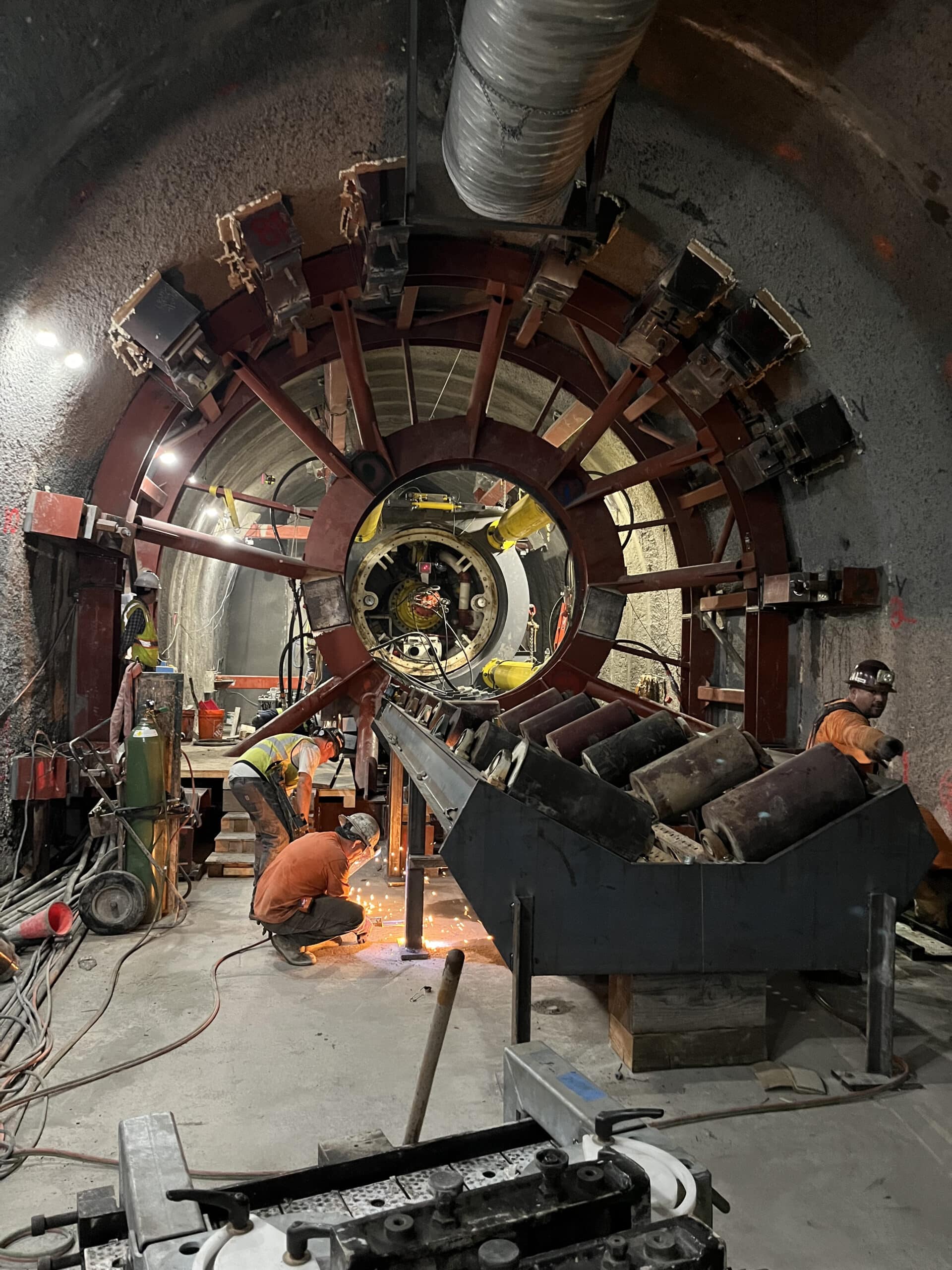
The team designed a thrust frame without a reaction surface behind it, and positioning the MTBM at the headwall that was offset from both lateral and vertical center points of the horseshoe tunnel. This required a thrust frame that was asymmetric in both axes while also requiring anchorage that did not damage or conflict with the existing steel ribs and shotcrete support system within the existing horseshoe tunnel. As a result, almost every member and connection was unique length and geometry.
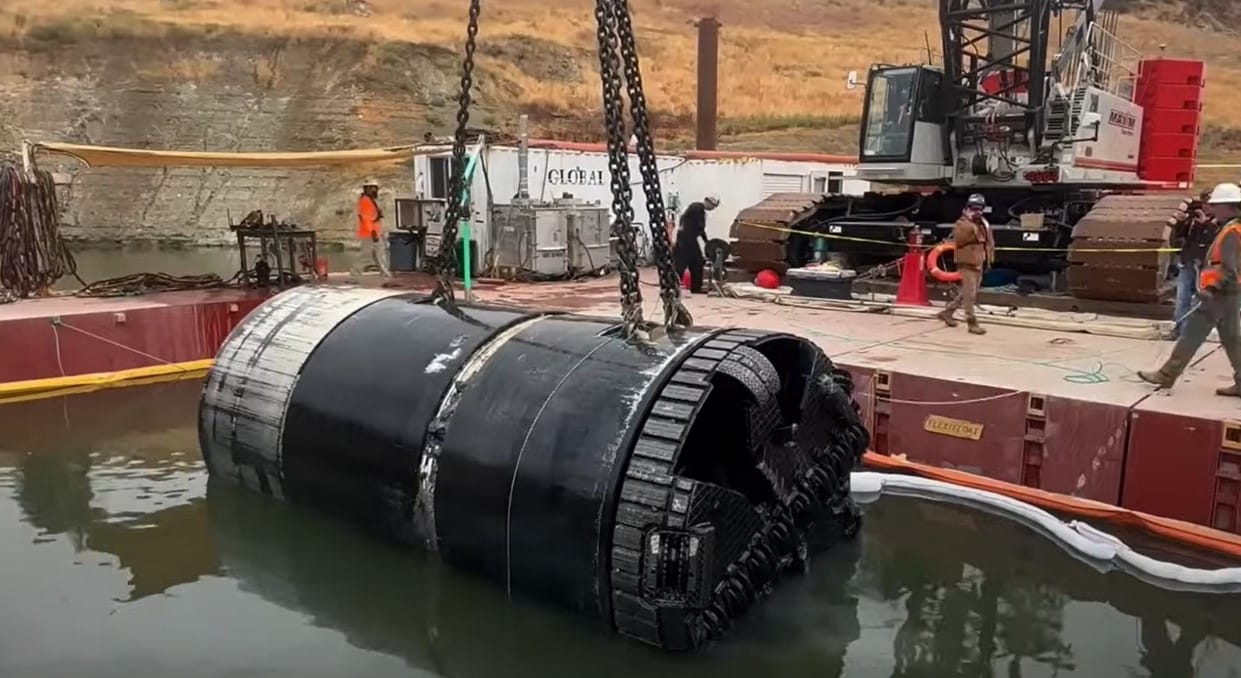
Another challenge Brierley Associates helped solve was the need for the MTBM to tap into the filled Anderson Reservoir, thus requiring an “in-the-wet” recovery after the tunnel was complete and the MTBM had broken through into the reservoir. This was accomplished by designing redundant isolation bulkheads in the steel tunnel lining that protected the tunnel during ongoing work and allowed flooding of the MTBM and removal of it in sections from the reservoir using cranes and barges. Designs of the removal sequence required an evaluation of each stage to confirm negative buoyancy of the machine, and that stresses in the steel tunnel lining would be within acceptable limits during the entire sequence at any reservoir level.